Spatial Computing's Keys to Success
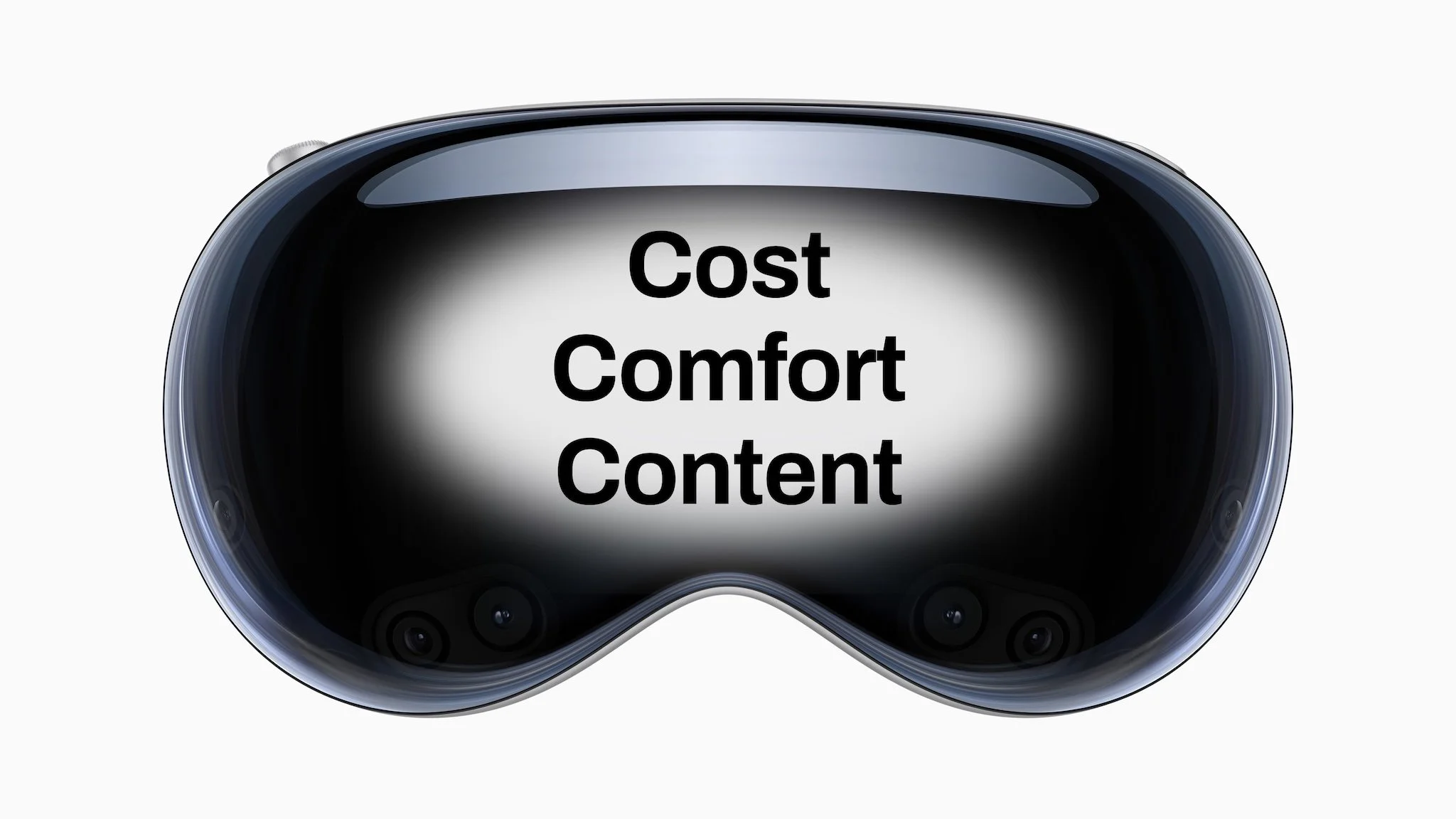
Keys to Success: Cost, Comfort, Content
1 Oct 2026
Apple, Meta, Google/Samsung, and others are fighting to create a new hardware platform category: spatial computing.
The term "platform" is important because this is something third parties can create apps and experiences for that individuals and organizations can potentially pay for. In other words, the platform is the foundation for an ecosystem.
The term "hardware" is important too because, unlike social media platforms or online stores that users access using their existing devices, spatial computers require users to spend money first.
With that in mind, the three key factors that will determine a spatial computing platform's success or failure are cost, comfort, and content.
Cost is the amount of money required to acquire the device. Most discussions of "platforms" focus on software or services and therefore give little attention to hardware acquisition costs. This is understandable because entirely new platform categories requiring consumers to purchase new hardware are relatively rare. Examples include:
Personal computers (e.g., Mac and PC)
Mobile devices (e.g., iPhone and Android)
Game consoles (e.g., PlayStation, Xbox, and Nintendo)
Spatial computers represent another platform category in which users must purchase new hardware before they can participate.
Before a user can buy an app or pay for an experience, they must first buy the device.
Comfort is the amount of friction associated with using the device after it has been purchased. It includes factors such as weight, heat, pressure on the face, and the effort required to set up the device for each session. For some users, it can also include concerns such as messing up their hair or makeup. Latency between head movement and the corresponding visual update—known as motion-to-photon latency—can cause nausea or other discomfort. Poor visual clarity caused by insufficient resolution and other factors can also lead to visual fatigue. Too much friction can lead to infrequent use and, eventually, abandonment of the device altogether.
Content encompasses the apps and experiences available on the device. Ideally, the device provides a better way to experience that content than alternatives such as phones, computers, or TVs. At its best, the device enables unique and valuable apps and experiences that simply are not possible on other types of devices. Too little content can also lead to infrequent use and, eventually, abandonment of the device altogether.
Thus, cost is the barrier to adoption, comfort is the barrier to use, and content provides the value needed to overcome both.
These factors also play off one another. For example, increasing comfort by reducing latency and improving visual clarity can drive up the cost of the device. Similarly, until the customer base becomes large enough to support a healthy third-party ecosystem, the company must create enough first-party content to attract new buyers and encourage existing owners to use their devices regularly. Creating this content costs money, which can further increase the cost of the device.
This creates a difficult cycle. If the device isn't affordable enough to attract a growing base of new users, or if existing owners don't use their devices regularly because of poor comfort or a lack of compelling content, a healthy third-party ecosystem may never emerge.
Cost, comfort, and content are key to spatial computing's success. No company has found the right combination yet.